
Category Archives: Immediate Reactions

Recommended Reading (and Listening): “Private Empire: ExxonMobil and American Power”

An important new book by Steve Coll, a favorite author whose earlier works on the breakup of AT&T and the disastrous acquisition by Texaco of Getty Oil had significant effects on my views.

Coll is hitting the interview circuit this week promoting his most recent book.  For Alaskans, one interview of special significance is this morning’s discussion with Steve Inskeep of NPR’s Morning edition on “How The Valdez Oil Spill Shaped ExxonMobil.”  Not only is the link to the Valdez oil spill of interest, of even more significance is Coll’s insight into how Exxon thinks and acts.  Coll also had second, longer interview focused on other aspects of the book yesterday with Terry Gross on NPR’s Fresh Air.
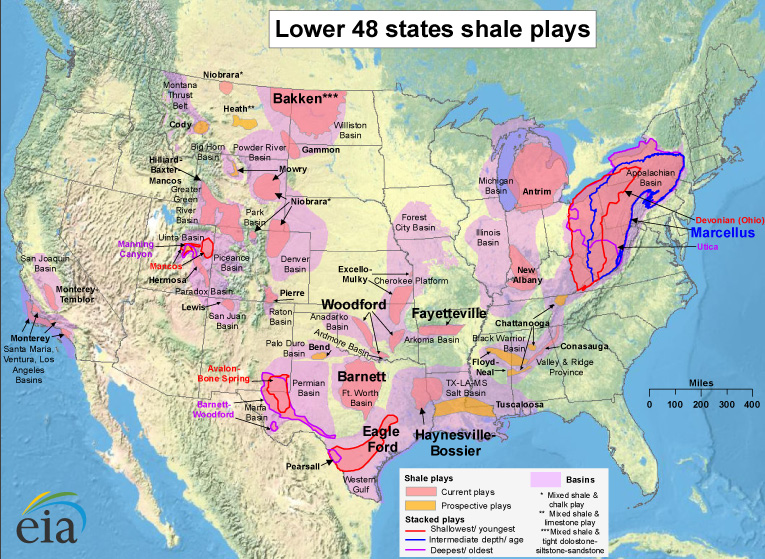

One View of the Future, and its Not Good for Alaska

The Alaska World Affairs Council (AWAC) lunch yesterday was interesting — and important.  The speaker was Lou Pugliaresi, President of the Energy Policy Research Foundation (EPRINC).  The presentation was part of AWAC’s recent “Oil & Gas Series.”  The title was “The Coming Renaissance in North American Oil and Gas.”

While AWAC likely will post the slides Mr. Pugliaresi used at yesterday’s presentation, they largely were drawn from the set he used  earlier this month before the Annual Washington Energy Policy Conference hosted by Center for Strategic & International Studies.  That presentation is available here.

Continue reading

Alaska Oil| Looking at the Special Session … UAA Volleyball and Dick Clark’s Legacy

Dave Stieren asked me to come on his  afternoon talk radio show yesterday to start a periodic discussion on Alaska oil issues.  In the course of addressing the issues which are on the agenda for the Special Session, we also touched on the University of Alaska Anchorage Volleyball Team, Dick Clark’s legacy and started toward — but didn’t quite reach, yet — bluegrass music.  The discussion is at the first half of the third hour yesterday.   The podcast is available at The Dave Stieren Show Hour 3 (4.19.2012).

The Alaska Dispatch Asks the Wrong Questions

In the last two legislative sessions preceding this one, the Alaska Dispatch offered some of the best political reporting available in this state on oil issues. Rena Delbridge during the 2010 session, and then Patti Epler during the 2011 session, were insightful, accurate and balanced. Both also were largely resident in Juneau during the sessions and thus, were able to keep their finger on the pulse of the developments as they occurred.

This year, the Dispatch has not stationed any reporters in Juneau, and more importantly, apparently has given up on reporting the news in favor of providing opinionated, and not altogether well informed, commentary. For those who had come to rely on the Dispatch as an excellent source of news mixed with insightful commentary, the result is disappointing. In many respects on this issue, the Dispatch is turning itself into a mirror version of the old Alaska Standard or the current Anchorage Daily Plant, a trite, predictable outlet for a single minded point of view. The result is that in reporting hard news on oil issues, this year the Dispatch has easily been passed by the “old guard” media, like the Anchorage Daily News, Fairbanks News-Miner and Juneau Empire. Continue reading

Why Marginal Tax Rates Matter to the “Average Guy”

In an article responding to recent columns by Andrew Halcro and me, the Alaska Dispatch’s Amanda Coyne concludes that “Alaska’s oil tax myths, surprise, remain busted.” In reaching the conclusion, the Dispatch’s Coyne argues that “[b]y standards of the average guy — the one who isn’t getting rich working for the oil companies, the one who doesn’t have future political aspirations, and the one who, in fact, makes up nearly all of our majestic state — the oil-tax myths we busted remain busted.”

While I didn’t get the reference at first, a friend pointed out that the Dispatch’s Coyne apparently was attempting to be insulting at the same time as she was summing up her argument. Because I never have – and never will – run for office (heck, I couldn’t even get elected to the Board of the Alliance), I suppose I am the “one” she references who is “getting rich working for the oil companies.” Given the level of my contributions to, among others, the University of Alaska Anchorage, I am not sure my tax accountant would agree, but whatever. Continue reading

Busting the “Myth Busters”: Where the Alaska Dispatch Went Wrong

[Please also read the Addendum following the article added Feb. 28, 2012.]

In a highly-promoted two part series last week titled “Myth-busting claims in Alaska’s oil tax debate,” the Alaska Dispatch identified what they “consider the most duplicitous oil-tax myths being perpetrated surrounding the oil-tax debate raging in Juneau.”  Part 1 of the Dispatch piece is published here; part 2 is here.

The series doesn’t attempt to address “myths” existing on both sides of the debate – and there are.  Unabashedly, the Dispatch focuses only on what the authors identify as those “myths that have arisen, one way or the other, from the oil industry and their allies.”  So much for balanced reporting.

Later in the week, Andrew Halcro took on the Dispatch’s alleged myths one-by-one in his blog in a piece titled, “C’mon.”  Interestingly, while the Dispatch has run other of Halcro’s pieces on its pages, to date it has not published this rebuttal.  For those interested in balance, Halcro’s piece is a good beginning. Continue reading

Dermot Cole: Legislators should reverse course on bill to limit access to campaign finance reports

From Dermot Cole’s blog today, Legislators about to pass bill to limit access to campaign finance reports,” Fairbanks Daily News-Miner, Feb. 15, 2012.:

Our legislators are racing to make it more difficult for the public to follow the money at election time.   In the last two weeks, a bill to ease the electronic reporting requirements of candidates with the Alaska Public Offices Commission has been introduced and moved to the verge of final passage in both houses. …

There are onerous tasks associated with running for state office, but electronic filing with the APOC is not one of them. …  Legislators should reverse course on this bill.  They should focus instead on working with the APOC …. 

As someone who has (attempted to) follow campaign finance reports in the past, I agree with Dermot.  The current law, which requires electronic filing for the first time this year, creates transparency and openness — good things.  This proposed change goes in the wrong direction.

For APOC’s views on the bill, see Casey Kelly, “APOC Blasts Bill Changing Campaign Disclosure Rules,” KTOO Juneau, Feb. 14, 2012.

Oil, Gas & Juneau

The appearance before Senate Resources last Thursday was interesting.   The slide deck for my testimony is here.   As I said to the Committee, the “August 9” date on the cover is likely because it was snowing (again) the day I did the slide and my subconscious was wishing for another season.  The actual date, of course, was February 9.

The video of the hearing is here.  My appearance begins at 35:35.  There were several questions and comments by members of the Committee.  The most extensive comments came from Senator Stedman.  Part of my presentation contained a series of slides and discussion around recent forecasts made by the Office of Management of Budget (“OMB”).  The forecasts come from the most recent OMB 10-year plan and  compare the level of state expenditures against revenues over the ten year period beginning with Fiscal Year 2012.

Due to declining oil production, the OMB report clearly shows and my testimony reflects that Alaska government starts running a deficit (expenses exceed revenues) sometime this coming decade under all of the scenarios addressed in the plan.  Under OMB’s most probable scenario, the deficits start in FY 2016 — a little over three years from now — and continue to deepen through the remainder of the decade.   But that scenario assumes the continuation of very robust oil prices, ranging from an average of roughly $109/bbl in FY 2012 to $120/bbl in FY 2022. Continue reading

Talking About Alaska Oil & Gas

My appearance yesterday on the Dan Fagan Show — the television version — is available here.  The segment runs from 1:54:30 to 2:27:10. Dan followed up for a few minutes after beginning at 2:29:30. The discussion started with the recent TAPS decision by Judge Gleason, and went on from there.  We continued the exchange this morning on Dan’s new radio show on KOAN — and ended up having an extended discussion of the Norway business model.  I don’t find a recorded segment available online of the radio discussion, but it was an interesting exchange that I look forward to continuing.

In the meantime, HCR 19, “Acknowledging the lessons learned from the 2011 Norway Policy Tour and encouraging investment in the state’s oil and gas industry,” introduced by Rep. Bob Herron and co-sponsored by Reps. Edgmon, Seaton, Tuck, Guttenberg, Gardner, passed the House Economic Development, Trade and Tourism Committee this week and has been referred to House Rules for consideration before being advanced to the floor for a vote.

Among other things, the Resolution calls on the Legislature to “explore how co-investment in resource extraction activities would benefit private sector job expansion, affordable energy options, value-added options, revenue generation and competitiveness.”  That’s a start.

Alaska’s Economy| What happens at $70/bbl oil?

While catching up on reading over the weekend I came across an article in the Calgary Herald that made my hands go cold.  The headline was “Shell sees oil lows of $70 in 2012 volatility.”

The story reported on Shell’s recent 2012 outlook and quoted Shell Chief Executive Peter Voser as saying, in preparing the outlook, that Shell had used “a $50-$90 range for oil.”

Then, discussing the $50-$90 planning range, “Simon Henry, Shell’s chief financial officer, told analysts: ‘I’m not sure we see it right at the bottom of that one over the next 12 months, but we could certainly see it in the middle of that range.'”

What is the impact on Alaska if Shell’s outlook is correct, and oil ends up “in the middle” of a $50 – $90/barrel price range on the year?  Very, very bad things. Continue reading