Alaska Oil| Misreading the Signals

Senator Joe Paskvan (D-Fairbanks) issued a press release yesterday in response to an article that appeared in this week’s edition of Petroleum News (“North Slope Booms:  Upcoming exploration drilling season shaping up to be busiest in decades“).  Sen. Paskvan’s press release includes the following statements:

It appears that Alaska’s tax credits under its production tax system are working to promote capital expenditures, including new exploration wells. Good news for the industry and the state, which relies upon the industry for revenues to its treasury. Exploration should mean increased oil production and increased throughput down the pipeline.

The names of the well drillers may not be familiar to many Alaskans. They include Great Bear Petroleum, Linc Energy, Repsol, Brooks Range Petroleum and UltraStar. This is strong evidence that the independents in the oil industry are both looking at Alaska as a place to do business and that they are actually coming to Alaska to develop our abundant oil resources.

This is good news, but I do not want to be overly optimistic until I have the opportunity to talk directly with the companies.  As we all know, there is always the potential for a gap between the plan and the performance.   I hope that the Alaska public will join me in learning more about today’s announcement.

The caution reflected in the last paragraph is highly appropriate.  Some observers are beginning badly to misread the signals that are being sent by recent developments and Senator Paskvan should be careful about falling into that group. Continue reading

Alaska Oil| North Slope employment study: Useful, but not Determinative

The Alaska Dispatch today carries a story on the North Slope employment study commissioned by the Senate Finance Committee last week.   According to the story, the study is to analyze “North Slope oil field hiring practices in an effort to figure out whether it’s true that the coveted jobs are not going to Alaskans and why.”

The study may produce interesting data, but the story raises a concern about how at least one Senator intends to use the data the study produces.  The article reports that the study and related hearings that Senator Dennis Egan (D-Juneau) plans on holding are  “aimed at getting oil industry officials and workers to shed light on the existing situation [the apparent underemployment of Alaska workers on the North Slope] and how it can be improved. Otherwise, it makes no sense for the state to give away state money when it is getting no new jobs in return, he said.” Continue reading

Alaska Oil| A Better “Picture Worth a Thousand Words”

Hollis French and Les Gara recently made much of a picture French snapped on his iPhone while “touring” the Portland Harbor.  That picture was much ado about nothing. At best, the oil & gas rigs featured in French’s picture brought the number currently operating in Alaska to a grand total of six .   That compares in the current week to  866 in Texas, 189 in Oklahoma,  175 in Louisiana, 161 in North Dakota, 114 in Pennsylvania, 84 in New Mexico, 67 in Colorado, 46 each in California (yes, Jerry Brown’s California) and Wyoming, 31 in Arkansas and 2o in West Virginia. Continue reading

Alaska Gas| The ADN editorial is wrong.

From the Anchorage Daily News editorial page, July 31, 2011:

Our View:  Initiative Required … Dan Fauske, head of the Alaska Gasline Development Corporation, and Bill Walker, general counsel to the Alaska Gasline Port Authority, provided reports on two very different megaprojects this month. … Both argue for state ownership of a pipeline to tap Alaska’s treasure of North Slope gas. Both require Alaskans’ initiative to secure our own energy and wider economic future. … Lawmakers and the governor need to vet both of these proposals, and if either makes sense, put the wherewithal of the state behind it — and we don’t mean with another round of studies. Alaska has the resources to take care of its own energy needs and gain by world demand. We need to get them out of the ground.

The ADN is wrong. The next step should be an Open Season by both projects. Prove that there is market demand before committing significant state funds. Consistent with recent ISER studies, Alaska needs to ensure that any use of state money produces returns at least as strong as those earned by the Permanent Fund. Sinking state money into projects without demonstrated market support undermines future Alaskans.

Recommended Reading| International Petroleum Fiscal Structures

The competitive context in which Alaska operates is critical to understanding investment in Alaska oil and gas. The Alaska oil region does not exist in isolation.   As with any investor, oil companies weigh one opportunity against another before committing their capital.  As the Fraser Institute reports annually, several factors go into the weighting, but very high on the list is the type and predictability of the the fiscal structure governing the project.
Even though understanding the competitive context is critical to establishing oil policy for a region — and even though Alaska’s economy is hugely dependent on oil — Alaska, particularly the Alaska Legislature, approaches the issue oddly. Rather than developing an ongoing capability in Alaska charged with staying abreast of Alaska’s competitive position and suggesting adjustments as circumstances warrant, the Legislature appears content instead to rely on occasional reports by Outside experts. Continue reading

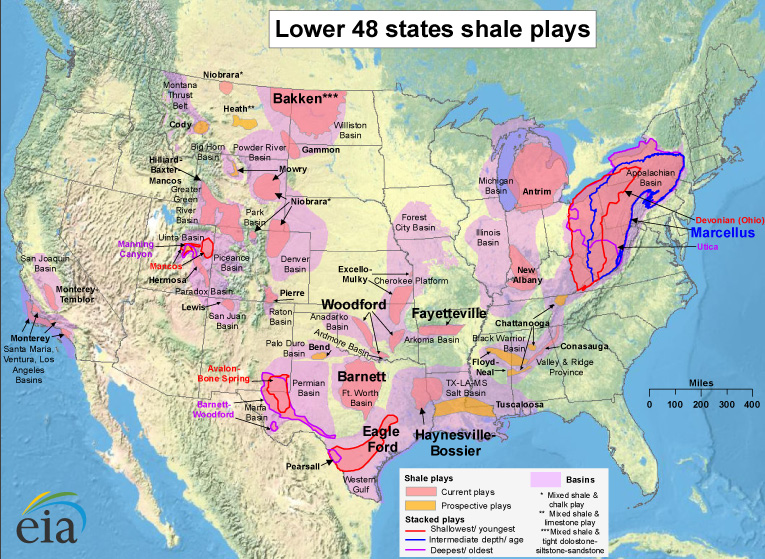
Recommended Reading: New EIA Report, “Review of Emerging Resources: U.S. Shale Gas and Shale Oil Plays”

A new report by the U.S. Energy Information Agency is an important read for all seriously interested in oil development and economics.   See “Review of Emerging Resources:  U.S. Shale Gas and Shale Oil Plays, Energy Information Administration (July 2011).

While reports about gas shale plays in the Lower 48 have become increasingly common on a region basis, this report is an excellent comprehensive overview of the staggering size of the potential of the resource at the full Lower 48 level. Continue reading

Alaska Fiscal Policy| Alaska’s Legislature Is Spending Away Alaska’s Future

An article in yesterday’s Anchorage Daily News caught my attention.  The article — “Parnell budget vetoes due in next 2 weeks” — reports on the status of the Parnell Administration’s consideration of the Alaska capital and operating budgets passed during the recent legislative session.

The truth?  The Alaska Legislature is spending away Alaska’s future.  In a recent report, UAA’s Institute for Social and Economic Research concluded that while oil production has built the Alaska economy, extending the current production and revenue numbers past 2020 reveals “a story of significant decline.”  See Alaska’s Petroleum Industry, Transformative But Is It Sustainable,” University of Alaska Anchorage, Institute for Social and Economic Research (April 2011). Continue reading

Perkins Coie Ranked Among Alaska and the Nation’s Best …

Chambers USA ranks the leading firms and lawyers in an extensive range of practice areas throughout America. The guide is read by industry-leading companies and organizations worldwide. It is also widely used by firms in all states for referral purposes.

As in prior years, this year Chambers USA once again ranked Perkins Coie’s Alaska Environmental, Natural Resources and Regulated Industries’ practice as one of the state’s best.  This year’s comment by Chambers: Continue reading

Once again, Sen. French Misses the Point …

In a Compass piece appearing in today’s Anchorage Daily News, Sen. Hollis French argues that Alaskans should not be concerned about the level of oil taxes because a recent judicial opinion finds that TAPS may continue operating for longer than Sen. French suggests some have recently argued.  See H. French, “Judge’s ruling underscores longevity of oil pipeline,” Anchorage Daily News (Jun. 16, 2011).

Once again, Sen. French misses the point.  As Scott Goldsmith/ISER have pointed out, even assuming the pipeline operates forever (which it won’t — Sen. French also overlooks the point about whether it will be economic to make the investments necessary to heat the pipeline as production continues to decline), the revenues from oil will fall in the near future to levels below those needed to sustain Alaska state government as we have come to know it.  See S. Goldsmith, “Revising the State Fiscal Plan to Account for Petroleum Wealth,” Web Note 9, Institute for Social and Economic Research, University of Alaska Anchorage (May 2011).   Even with the most optimistic assumptions about oil decline, the State will start eating into savings in 2018 and all savings will be gone by at least 2028, and possibly as early 2023.

Continue reading

Recommended Reading: Professor Haycox’s June 10, 2011 Commentary

Dr. Stephen Haycox, Commentary: “Spending Cap Would Simplify Oil Taxes,” Anchorage Daily News, June 10, 2011.

Written by one of Alaska’s foremost historians and observers, this commentary endorses the recent proposal from Scott Goldsmith of UAA’s Institute for Social and Economic Research (ISER) to bring a rational order to Alaska’s current spending spree.  Like Goldsmith, Haycox recognizes that Alaska’s current fiscal policy undermines the economic outlook for future generations of Alaska.  In Dr. Haycox’s words, “The concern over Alaska’s economic future in the face of the fall-off of Prudhoe Bay production is appropriate. … Scott Goldsmith of UAA’s Institute for Social and Economic Research suggests we cap petroleum spending at $5 billion annually …. It’s an elegant solution to the current panic ….”  Read Dr. Haycox’s full commentary at the above link.  The Goldsmith paper is “Revising the State Fiscal Plan to Account for Petroleum Wealth,” Institute for Social and Economic Research, University of Alaska Anchorage, Web Note 9, May 2011.