
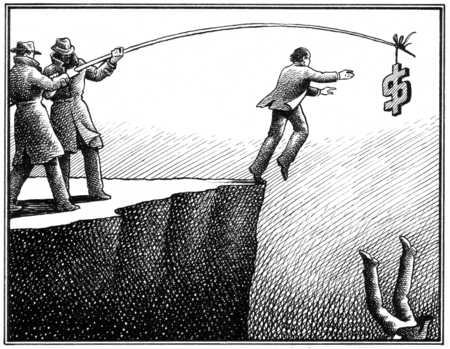
 For the past several years I have contributed a lot of money to a lot of candidates (often at the maximum level). With the beginning of the current election season, the inevitable invitations to various legislative, gubernatorial and party fundraisers have started to appear again (by mail, email, Facebook, calls and in some cases even txt). Continue reading



 Oil & Gas Journal
- An error has occurred; the feed is probably down. Try again later.
- Financial Times
- An error has occurred; the feed is probably down. Try again later.
- Oil Price.com
- The Cushion Is Gone and the Oil Market Is Now Exposed
- Why the Iran Conflict Is Good News for Chinese Automakers
- Russia Warns of Force Majeure on Oil Cargoes After Port Disruptions
- Aker BP’s Earnings Slide Masks a Massive Growth Push
- A Key Russia-Iran Supply Line Remains Open Despite the War
- US Drillers Pull Back As WTI Soars Past $98
- $100 Oil Is Solving Russia's Budget Problem
- U.K. Oil Producer Urges North Sea Revival as Hormuz Crisis Disrupts Supply
- Asia Begins Pricing U.S. Oil Against Brent as Dubai Volatility Spikes
- Brent Surges Past $110 on Iran Rejection
- Oil Price.Net
- Aramco's IPO and oil prices
- The battle for Libyan oil
- Waking into our new volatile age of oil prices
- 4 oil price predictions for 2019
- Saudi Arabia steps backwards despite high oil prices
- Iran tensions to send oil price past $150 - again
- Sanctions and oil prices
- Is Volatility in Oil Price on the Way, Again ?
- 5 Oil Price Predictions for 2018
- Stable oil prices herald sea change for Strategic Petroleum Reserve
- Oil & Gas 360
- An error has occurred; the feed is probably down. Try again later.
- Platt’s Oil News
- An error has occurred; the feed is probably down. Try again later.
- Platt’s Natural Gas News
- An error has occurred; the feed is probably down. Try again later.
- LNG World News
- European Commission approves German LNG terminal joint venture
- Wheatstone LNG’s second train 90 pct done
- Volvo Trucks North America to Launch LNG Engine
- Video: Saipem’s work on Ichthys LNG pipeline
- STX Finland and Viking Line Sign Agreement for Cruise Ferry
- Shells prelude flng to start production in 2017
- Nobles Colorado LNG facility moving forward
- Poland: PM Says Nord Stream Will Not Block Development of Polish Ports
- Israel: FLNG Import Terminal Gets Shipment
- India’s Gorgon Project to Supply Petronet’s Kochi LNG Terminal
- Upstream Online
- An error has occurred; the feed is probably down. Try again later.
- Offshore Energy
- An error has occurred; the feed is probably down. Try again later.
- Law 360 Energy
- Texas Justices Pass On Uri Suits Targeting Power Suppliers
- Jailed Energy Trader Won't Fight $7.7M Judgment
- Why NY's Flagship Climate Law Is On The Rocks
- Court Keeps Alive EPI's Suit Over Ga. Commissioner Emails
- Lawyer Says Contract With Rivera Was For Venezuela's Oil Co.
- DC Judge Says 'God Squad' Can Meet Over Gulf Oil Drilling
- Texas Justices Take Up Challenge To $4M Subrogation Lien
- 2nd Circ. Tosses $16B YPF Judgment Against Argentina
- NC Biz Court Bulletin: Judge Exits, Duke Ducks Climate Suit
- State Carbon Cost Disparities Are Pivotal In Data Center Siting
- E&E’s Greenwire
- An error has occurred; the feed is probably down. Try again later.
- Politico’s “Morning Energy”
- An error has occurred; the feed is probably down. Try again later.
- Seeking Alpha Energy
- Saudi Red Sea exports hit record pace while bypassing Hormuz; Houthis say 'fingers on the trigger'
- Enterprise Products logs gains for the seventh straight session
- U.S. drilling rig count drops for second straight week, Baker Hughes reports
- Halliburton hits two-year high as J.P. Morgan sees little Q1 earnings impact from Iran war
- Burford Capital plunges after Argentina wins reversal in $16B YPF case
- Australia’s biggest LNG plants hit with outages from cyclone
- Crude oil edges lower as Trump extends pause on attacking Iran's energy sites
- Petroleum Economist
- An error has occurred; the feed is probably down. Try again later.
- Energy & Environmental News PM
- An error has occurred; the feed is probably down. Try again later.
- RBN Energy
- Rikki Don’t Lose That Number — ‘311’ Gas Transportation: What Is It, Why Is It, and How Does It Work?
- U.S. Rig Count Falls Nine to 543; Broad Declines Sweep Most Basins
- Canadian Rig Counts - Continuing Their Seasonal Decline
- Market Impacts of War, AI and Data Centers Dominate CERAWeek Discussions
- And the Thunder Rolls – Iran War Roils Pricing Just After U.S. E&P Returns Hit Four-Year Lows
- Refinery Margins Skyrocket as Fuel Gains Outpace Crude
- LNG Canada and Coastal GasLink Agree to Commercial Terms For the Phase 2 Pipeline Project
- Trans Mountain Launches Open Season and Updates Expansion Size and Timing
- Turn Me Loose – How Pipeline Capacity Scarcity and Seasonality Have Impacted WCSB Crude Oil Prices
- Propane Sees Record Production and Elevated Inventories as Export Constraints Emerge
- Forbes: Chris Helman’s Blog
- An error has occurred; the feed is probably down. Try again later.
- Platt’s Blog “The Barrel”
- An error has occurred; the feed is probably down. Try again later.
- Gail Tverberg’s Oil Blog
- A New Explanation for Tariffs and Bombings
- Understanding Deglobalization: The Role of Diesel and Jet Fuel
- 2026: Expect a very uneven world economic downturn
- Too many promises; too few future physical goods
- A lack of very cheap oil is leading to debt problems
- What has gone wrong with the economy? Can it be fixed?
- Sierra Club talk that may be of interest
- Why oil prices don’t rise to consistently high levels
- Worrying indications in recently updated world energy data
- What should individuals do in a world filled with conflict?

 Thoughts on Alaska Oil & Gas
The Legislature should rethink the Governor’s LNG proposal
BY BRAD KEITHLEY
As someone who long has argued in favor of state co-investment in the development of Alaska’s oil and gas resources, I was hopeful last fall when the state released the “Alaska North Slope LNG Royalty Study.”
With references to the need for “alignment” between the state and the industry and analyses of successful projects elsewhere in the world involving state participation, I believed that the Governor potentially was positioning Alaska to play a more active role in the development of its own resources, much in the same way as do some large landholders in the Lower 48 states and other governments that are resource owners.
The “Heads of Agreement” and related legislation (Senate Bill 138) that the Governor introduced at the start of the session, however, fall well short of the mark. Instead of adopting global best practices taken from successful LNG projects, the Governor’s proposal is a confusing patchwork that is fraught with risk and even if it works perfectly, would not advance the goal of enabling the state to help drive increased activity where Alaska needs it most – in the upstream development of its oil and gas resources. Continue reading →
Share this:
1 Comment
Posted in Published Commentaries